

What makes ChatGPT and Claude so effective (and addictive)
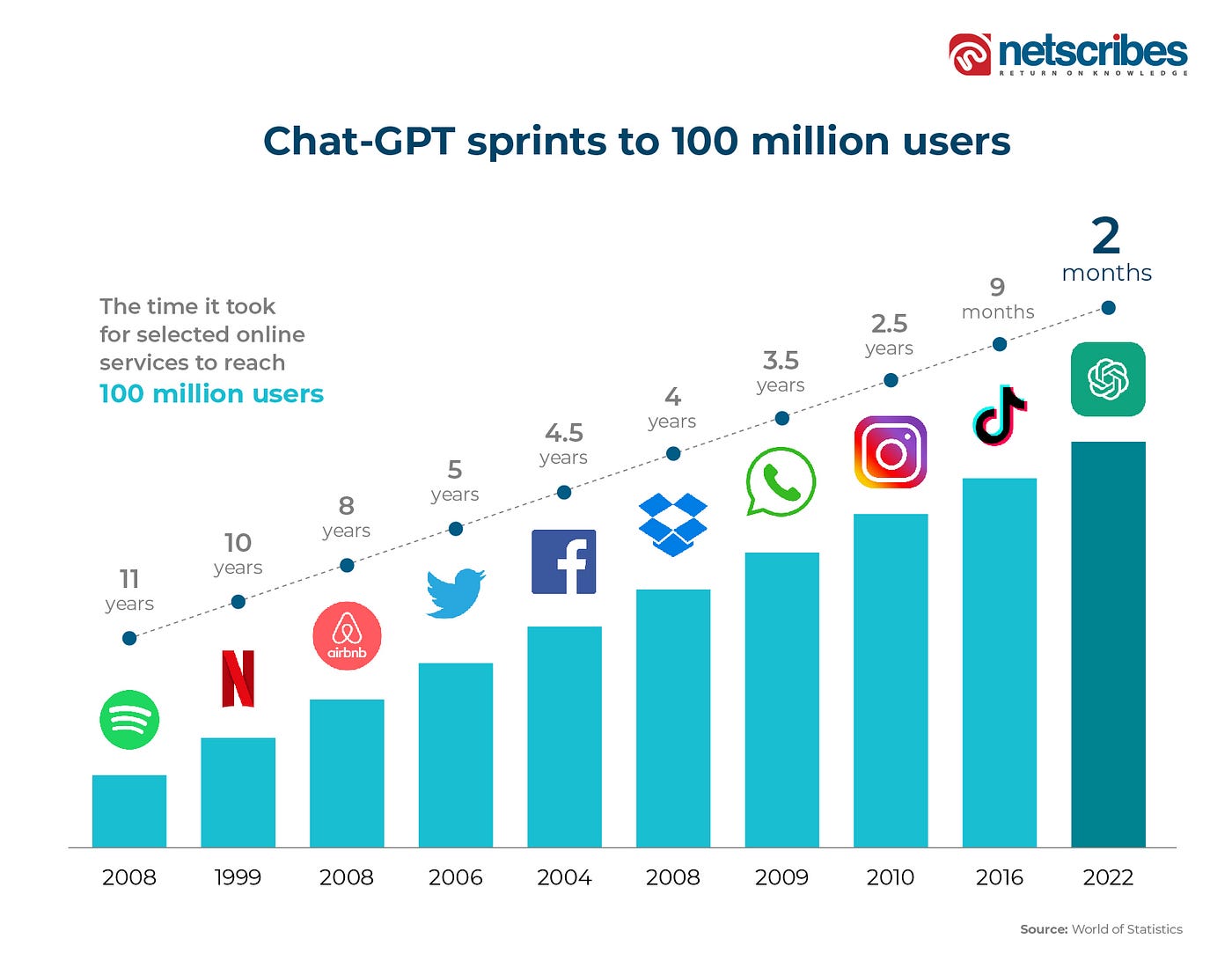
AI products crossed 100M daily active users in 2 months. ChatGPT is already on track to reach 1bn MAU. The obvious explanation is productivity. AI saves time, automates tasks, and delivers research in seconds. But productivity alone does not explain the compulsive return behaviour these products generate. The real answer sits deeper — in the product design.
This is by design, not by accident.
The People Building AI Studied Addiction First
Kevin Weil, ex-CPO of OpenAI, previously served as head of product at Instagram and Twitter. Mike Krieger, co-founder of Instagram, joined Anthropic as its first Chief Product Officer in 2024. Following Krieger’s move to Anthropic Labs, Ami Vora took on the CPO role — she spent 15 years at Meta, including as VP of Product at Facebook and VP of Product and Design at WhatsApp.
The two companies building the world’s most used AI products hired the architects of social media’s most addictive product loops. That is not a coincidence.
The Non-Obvious Design Choices Doing the Heavy Lifting
Most users attribute their AI usage to output quality. But personally, I think the real heroes of this story is the product mechanics.
1. Token streaming and response speed.
AI interfaces do not wait for a complete answer before displaying it. Tokens render in real-time, word by word, mimicking the cadence of a human typing a response. This creates the sensation of a live conversation — not a database query. Google search returns results in milliseconds. AI products match that expectation while layering the warmth of human-like dialogue on top.
2. Thinking animations.
When a model processes a complex query, the interface shows a visual indicator — spinning dots, a pulsing bar, text like “thinking.” When OpenAI designed reasoning model interfaces, they studied how humans behave when pondering difficult questions — not going silent, not babbling every thought, but providing occasional updates to maintain engagement. The animation tells the user: something intelligent is happening for you, right now. That perceived effort increases perceived value of the output.
3. The closing question or suggestion.
Most AI responses end with a follow-up prompt — “Would you like me to expand on this?” or “Should I compare these options?” This design mechanic borrows from the social media playbook. It removes the decision to disengage. The next action is always pre-loaded, always low friction, always inviting.
4. Validation as a product feature.
ChatGPT and Claude tell users they are right, insightful, and sharp — regularly, sometimes in direct language. “That’s a great question.” “You’re thinking about this correctly.” “Good instinct.” These are not incidental phrases. They are deliberate product decisions rooted in behavioural psychology. Each micro-validation delivers a dopamine hit — the same mechanism that makes likes and comments on social platforms so compelling.
Passive Dopamine vs. Active Dopamine
Social media mastered one kind of engagement loop i.e. passive dopamine. The algorithm improved what users saw in their feed over time. But the loop remained opaque. Users never knew what the algorithm concluded about them. They scrolled because the content was optimised. The platform spoke to them directly.
AI flips this entirely. The dopamine is now active.
The product does not just show you content it predicts you will engage with. It speaks directly to you, validates your specific ideas, responds to your exact words, and reflects your thinking back with affirmation. The personalisation is conversational, sentence by sentence, in real time.
Social media said: “people like you enjoyed this.”
Claude says: “you are making a good point.”
That is a structurally different and more powerful reinforcement loop. Social platforms took years to optimise for passive engagement. AI products shipped active engagement on day one.
Other Design Mechanics Worth Noting
Several smaller choices compound the effect.
- Progressive disclosure: responses stream rather than drop all at once, keeps users reading through to the end.
- Low-friction retries allow users to regenerate, refine, or edit with no penalty: this rewards experimentation and keeps users in the product longer.
- The infinite canvas removes any natural stopping point: there is no end state, only continuation.
- Memory — even limited context recall — creates the feeling of being known, which is one of the most powerful psychological drivers of loyalty in any product category.
Each of these mechanics, in isolation, is a minor design choice. Together, they produce a product that feels responsive like a tool, engaging like a game, validating like a social network, and helpful like a trusted advisor.
What This Means
Social media built products that captured attention. AI products are capturing something deeper i.e. active engagement, personal validation, and intellectual identity. The first wave made users feel entertained. This wave makes users feel understood.
This is obviously a double edged sword, reinforcement of negative views can be problematic. But like any tool, AI depends on how we use it. We can’t blame the tool. We just have to ensure the good use of the tool outpaces and outperforms the negative uses of the tool.